about LAST WORDS


Although I tried hard to keep the settings identical to the way I worked with shorts, making a feature — my first one — still undoubtedly intimidates me. The last time I finished a title was in September 2023. This two-year gap represents one of the biggest changes in my entire life. I graduated from TNUA, putting a full stop to my six-year, two-school university life, whose importance only revealed itself at the very end. When I stepped out of the hall after the graduation ceremony ended, I realized that deep inside, I wasn’t indifferent and detached at all. We were smoking with caps and gowns. I looked around and made eye contact with a classmate. He told me that he would not attend tomorrow’s afterparty after I asked him. Suddenly, an epiphany struck me hard. I realized that my pages had turned without a heads-up, and most of the people around me at that moment would either fade out on the next page or unconsciously give up their presence, despite the fact that we hadn’t even known each other well yet.
Wrongly, I used to believe there was a slim surface between me and my surroundings that made me superior to everyone around me, and detaching myself from activities or conversations served the purpose of maintaining that superiority. I fooled myself and hence lost a big chunk of time. It’s the cost of mistakenly confusing dissatisfaction with relationships and ignorance of them.
This was also a period for me to start thinking about my future, about what the next step after college would be. Instead of yearning, I was devastated by the potential future of quitting filmmaking. The truth that it was nearly impossible for me to make films for a living struck me stone-cold when the time finally came. My films, though they were only shorts, clearly were not popular in film festival selections. On the other hand, I hadn’t acquired the skills to devote myself to the industry. Then what could I do in this film world? There was no chance for me to survive. Thus, I had no hope for that.
I began experimenting with workflows and mindsets to make minor films that didn’t require as many resources as standard productions. And after Last Day of Winter, First Day of Spring, I became much more confident in saying that, dismissing exterior conditions, it was possible for me to make as many films as I wanted. Nonetheless, intimidating was the exterior part. I was satisfied with making films only as a hobby for my entire life, but it was unknown whether I was physically and financially competent to accept that mission. I had never held a full-time job, not to mention juggling one alongside filmmaking. Therefore, I pivoted my contemplation toward pursuing higher education abroad. It was a multi-sided solution to my worries that would not only extend my student career in filmmaking, generously providing space and time for me to postpone entering the labor market, but also create a new potential for me to become a professor after acquiring a master’s degree.
I applied to several institutions and was admitted with scholarships, which surprised me. Nonetheless, even with the scholarships, the financial gap between what I had and what I needed remained enormous. I applied for a government scholarship, which in the end turned out with an outcome I never pursued. Regarding what I wanted and what I should do, this two-year span was far too short for me to think and act properly. I built an imagination but was later carried by reality. Because of the lack of money, I gradually decided to decline admissions and enter the labor market after completing my military service.
I entered the camp in December 2023 and left it at the end of March 2024. I am tremendously grateful for what I encountered in those four months. Miraculously, everyone I met, despite different backgrounds, was kind to me. It’s splendid to know that people listen to you, and conversely, you have stories to listen to, even in such a restricted environment, with the presumption that none of you would ever contact each other after the final leave from the base. A few months before shaving my head and boarding the train to the camp, I regretted my nonchalance toward everyday life. Therefore, this service became a platform for me to pay attention to my surroundings and people. Since it threw chunks and chunks of personal time at me every day, I had nearly five hours daily to spend alone. I started reading heavily, writing journals, and practicing self-reflection. All of this turned into contemplation.
Get lin lin lin’s stories in your inbox
Join Medium for free to get updates from this writer.
It was during this time that I figured out I wanted to study abroad — although I ironically decided to get a job instead. Overall, the reason I’m writing this is to preserve the fact that there were vibrant inputs and scribbles in my head during that period, in a positive way. The last time I left the base, I was with a comrade. We talked a lot on the train back to Taipei, and while talking with him, an evocative thought emerged. I recalled a glimpse, parallel to half a year earlier, when I was talking to my classmate after graduation. However, this time, there was no melancholy in me, since I had tried my best during my service to appreciate every encounter.
The deviation in these parallel moments interested me deeply. I started imagining a series of virtual branches of the past and the future — the scenarios, and their vibrations. What would I do, what would I become, and what would I think if I were much more sentimental about everyday life? How would people react to me once I stopped concealing my gratitude toward them? Building on this foundation, my thoughts proceeded toward the curiosity of the bridge between self and gratitude to others. Why do I have this vague intuition that there’s a causality between being thankful for everything surrounding you and gaining a transformative acknowledgment of your own identity?
For reference, the gratitude I mention isn’t about simply saying thank you to others; rather, it’s regularly and abstractly weighing the existence of relationships in your mind, recalling how you met, what experiences you mutually shared, and what the last words he, she, or it gave to you were. By contemplating these last words, you open a vast landscape for gratitude, and furthermore, for consideration of who you are after these encounters. While jotting down this paradigm of thought as a solo game, I recalled a project I had wanted to do. In June 2023, I screened Last Day of Winter, First Day of Spring, and I remembered that once, during a small break before the post-screening Q&A, I was waiting with Joshua, Vivian, and Yi outside the cinema. We were rambling and chatting when suddenly Yi casually remarked that Joshua and Vivian’s breakup was nothing more than the right decision. They all laughed, without noticing that nobody had ever told me about the breakup. The moment I realized the misalignment between my projections and reality, I told myself this could be a feature project for me. A year later, in June 2024, I started making a feature called LAST WORDS in Taipei.
In 2024 and 2025, things started to settle down. The life of imagining, waiting, trying, and drifting eventually faded, but didn’t disappear. I used to avoid thinking about becoming a normal businessman, sitting in an office from nine to six without making films. The pressure of the mundane was daunting to me. But hilariously, I am currently writing this essay while sitting in an office, in front of a computer, in a normal businessman setting — but nearly finished with LAST WORDS. Once I entered the presumably treacherous stage of life, it revealed itself to be nothing more than stillness. Making ends meet isn’t as devastating as I used to think. It’s exhausting, of course. It wipes out the natural restlessness of life, making you doze off at any moment without appreciating the fragments passing you, but no more than that. Practically speaking, you can still make films amateurly while working a non-related full-time job.
When I started the production of LAST WORDS, I understood that this project would require a much different method to complete. Since it’s a feature, it would take more than just weekends to shoot. Although our crew is smaller than in a traditional setting, most of us have full-time jobs or internships, which means production inevitably had to be divided into non-linear parts. We had to shoot and wait, shoot and wait, repeatedly. Realizing this, I once considered shooting on weekends and pausing on weekdays. However, another possibility emerged in my mind, resonating with the structure of a jazz gig.
During a gig, most of the time you have solo sessions in sequence. Someone might start — maybe the tenor saxophone player — playing a few choruses on his own, improvising, and then the next player, let’s say the pianist, listens carefully and reacts to the previous choruses in his own sweet way, another solo improvisation. Eventually, all the “listen and react” becomes a solo session. Each part works independently but can be coordinated when viewed as a whole. This way of making art inspired me for film production, especially when I needed to shoot and wait. Why not make a film in parts as solo sessions? The film could be divided into different parts, let’s say one to four, and I would write, shoot, and edit the first part without any preliminary vision for the whole picture. After the first part was entirely finished, I would view it as a complete film and then make the next part to respond to it — of course, without presuming what the whole picture would eventually look like. In the end, by linking all four parts together, I could unconsciously arrive at something that resembles a feature.
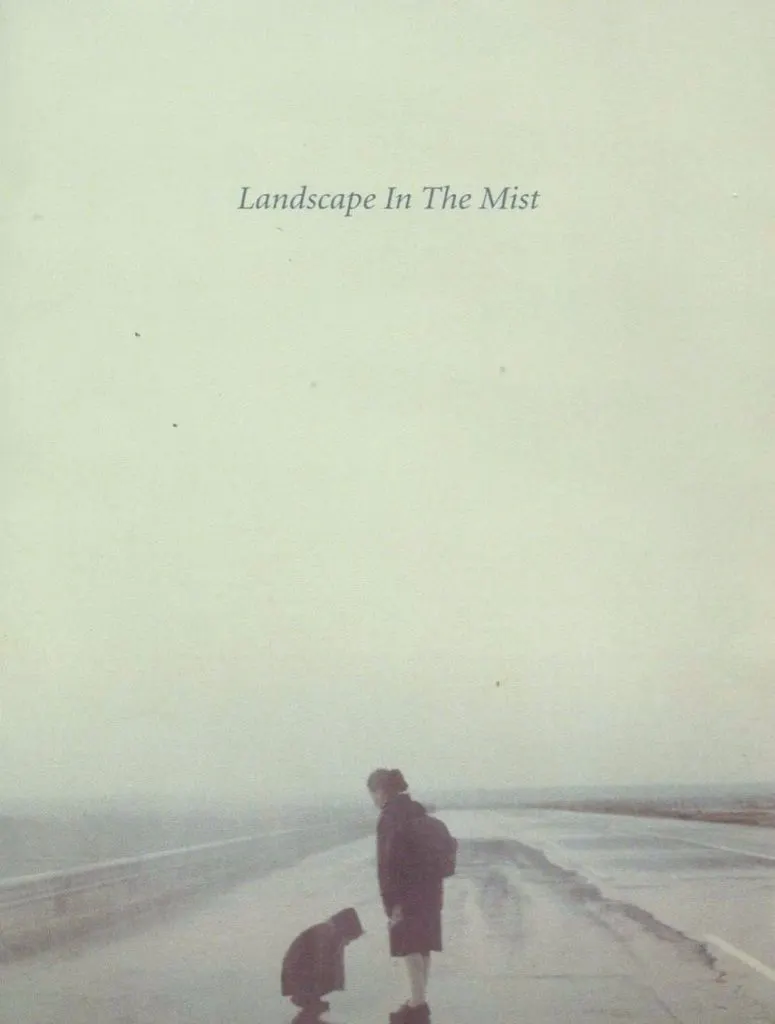
There are several benefits to working this way. First, the production timeline becomes far more flexible; I only have to compose the next part after watching the previous one. Second, since there are gaps of two to three months between productions, the audience can easily see the seasonal changes in the film, adding more dimensionality. Lastly, it frees me from the tradition of making a film with a predetermined meaning. I stop burdening myself with the “message” or “mission” of the film (it seems like nowadays every film is born to be a missionary); instead, I shoot each section based solely on what’s in my mind at that moment. Leaving behind concerns of meaning and objectives, I focus instead on letting myself become a transmitter lens between my daily observations and the film. This new way of filmmaking fascinates me; however, its practical implementation is far from fun. With daily hesitation and self-doubt, it’s more like walking in the mist without a map in hand.
Since none of the titles I’ve made have ever been acknowledged by major audiences, what LAST WORDS, or any future titles, mean is entirely personal. This is my first feature, which excites me sentimentally and brings me plenty of joy. This is the first film I’ve made after leaving school, identifying myself as a filmmaker rather than a student. This is the first project I’ve finished while working a full-time job, encouraging me to keep making films in the future. This is the first title that is extremely close to my life — so close that during the writing process, I often stopped and questioned whether it was too sharp for those around me. But I kept pushing forward. There has been an overwhelming urge for me to use fiction to depict reality, even though the reason is absent.
Thanks to Vivian, Joshua, Tien, Jennifer, and Sherlock for participating in this title. Thanks to everyone in the ending credits as well.